





South Slough Estuarine Reserve provides great opportunities for the community to get involved with their local ecosystem through learning, volunteering, internships, hiking, and more. South Slough is a state-owned and protected land where salt and freshwater meet; aimed at education, stewardship, and research to improve the understanding and stewardship of Pacific Northwest estuaries and coastal watersheds. It stretches over about 7,000 miles, encompassing forest, wetlands, water channels, and riverbanks. The reserve was established in 1974 by the National Estuarine Research Reserve System as the first of now 30 Estuarine Research Reserves around the nation.
South Slough has both hosted and run internship programs for a long time, since before 2013, and has continued to grow since then. The reserve offers internship opportunities for college and high school students as well as any adults interested. Currently, South School is looking for high school students aged 15 to 18 to join them as Estuary Explorers Interns, working after school and getting paid a stipend of 15 dollars an hour. Work days for the interns are Wednesday, Thursday, and Friday from 3 p.m. to 5 p.m.
They also meet virtually once a week with the South Slough Educator, Cherie Turner, for planning. The interns assist Turner in guiding STEM lessons and activities to different schools and their classes in our area in terms that typically last six to eight weeks. It’s a great opportunity to gain a deeper understanding of coastal ecosystems and leadership skills. Those interested can find the application on the South Slough Website
“It’s also a valuable tool for young people who are trying different things and going, ‘Okay, I did this internship, and I thought I would like it, but I didn’t really like it,’” said Deborah Rudd, the Public Involvement Coordinator at South Slough. “It’s better to find out this way rather than to go into this whole career and find out you hate it.”
Interns can get a look into what it’s like in career fields where they are either working with children, the outdoors, or both. It benefits everyone involved with education and experience. The program implements nature journaling with the kids to magnify their learning.
“With nature journaling, you can tie any science standard really with any possible activity,” said Turner. “So it’s trying to bring the students to the 21st century with those next generation science standards through using nature journaling. It’s their ability to be able to record whatever information relating to what we are talking about and can keep for the rest of their life.”
Turner runs the program, teaching the classes and overseeing the interns. She sets up the journals and teaches the kids how to use them. Lessons are modified based on what grade level is being taught.
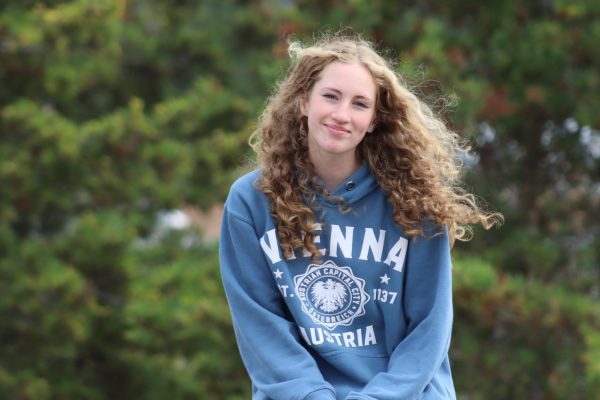
“It’s important for kids to expand their knowledge about where they live and how to better take care of the environment,” said Ella Chan, a sophomore at Marshfield High School who has both volunteered and gone to summer camps at South Slough.
Another chance for the community to work with South Slough is volunteering. They take both general volunteers and people wanting to participate in events such as their monthly Saturday Sewards. In November, Marshfield High School’s Z-club members started attending the events.
“By planting trees and removing invasive species, we were taking part in helping indigenous species to thrive,” said Anycha Ramirez-Reyes, an MHS sophomore who has volunteered at the November Saturday Seward and other events with South Slough.
Volunteers got to plant nurse cribs to restore the reserves’ tidal forested swamps. These nurse cribs are wooden boxes filled with a soil and wood chip mixture to replicate a decomposing tree–from which saplings sprout–in order to quicken the process. In each crib, five native tree species saplings were planted. Following the planting, volunteers removed invasive species, specifically Cotoneaster. After the event, lunch is provided to the participants if they are interested.
“This program, Saturday Stewards, started in 2019,” said Rudd. “The first project that everybody did was actually up near the visitor center, where we had a thinning project. None of the forest had been tended to in 40 years, so it had a lot of undergrowth and was a very dangerous fire hazard”.
Saturday Sewards was started by Alice Yeates, the Stewardship Coordinator. After the thinning project, they moved on to planting native species. The work that volunteers do at South Slough is part of a much larger effort to protect estuarine environments, which are among the most productive ecosystems on earth. These areas support countless species of not only plants but also fish, birds, and invertebrates, many of which depend on the estuarine environment during key stages of their life cycles. Interns and other employees collect data on different species, surveying their progression and adaptation.
So much research is performed on this land, and its data has been used in numerous scientific studies that help us learn more about the planet. They also provide community classes, giving more people the opportunity to educate themselves, such as their mushroom workshops. The class involves how to identify local mushroom species and techniques for harvesting them. South Slough offers both free and paid classes. The mushroom workshop specifically costs 25 dollars per person, and most classes require registration previous to attending the class.
The community can also go on a self-guided journey. Exploring the lands through hiking, recreational berry and mushroom picking, canoeing, birdwatching, and more.